


 IND
IND

.svg)
.svg)
.svg)
.svg)
.svg)
.svg)
.svg)


.svg)

.svg)


© 2025 Excelsior Technologies.
.webp)
.webp)












Angular
Why Angular is a Game-Changer for Enterprise Web Applications
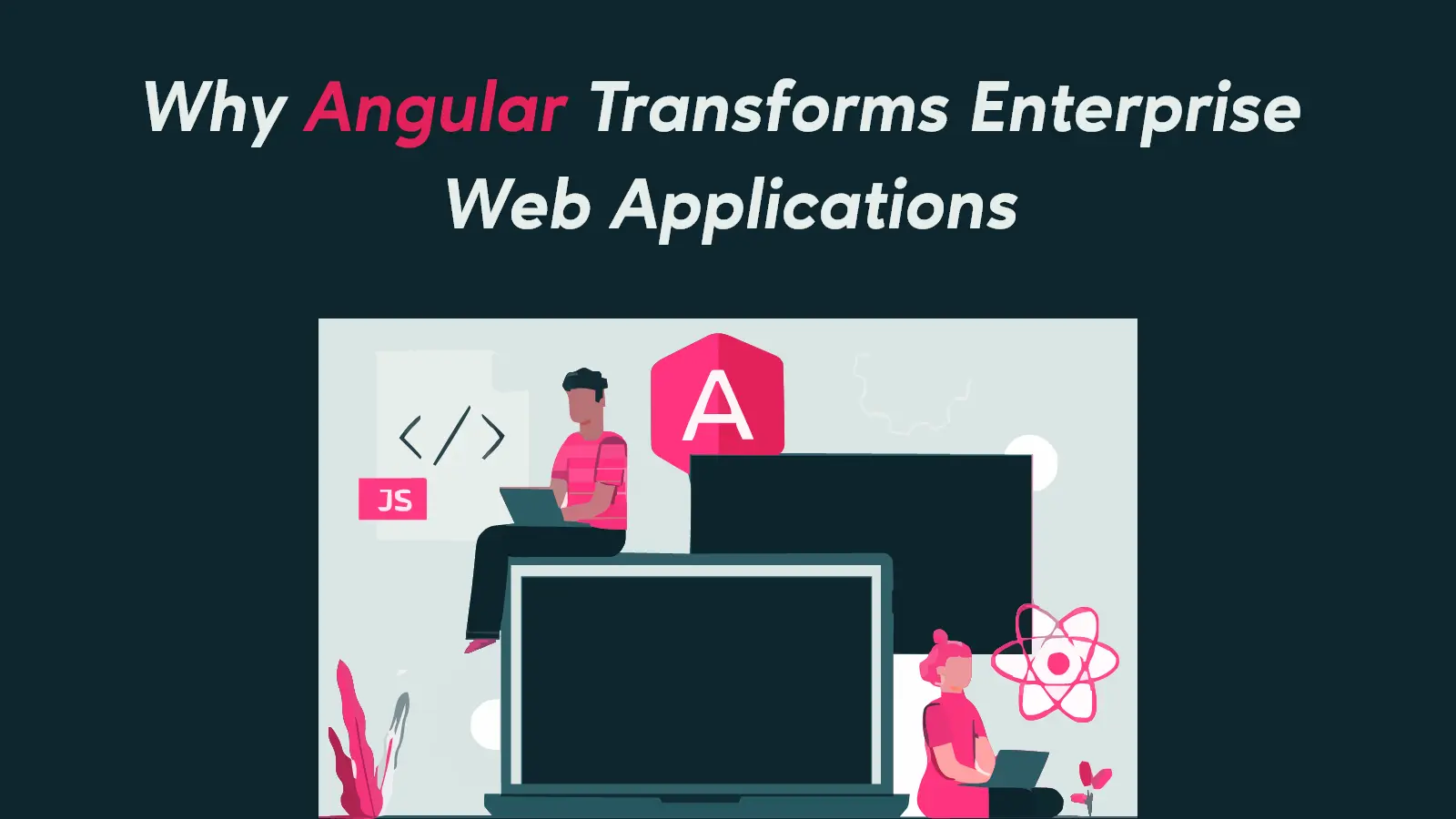
Angular, developed by Google, is a robust framework designed to address the needs of complex enterprise-level web applications. Its powerful features and capabilities make it an ideal choice for enterprises seeking to build scalable, maintainable, and high-performance applications. This blog delves into the reasons why Angular stands out as a game-changer for enterprise web development, focusing on its modular architecture, strong typing with TypeScript, and advanced tooling. By leveraging Angular’s capabilities, enterprises can achieve efficient development workflows, enhance application performance, and ensure a high-quality user experience.
1. Modular Architecture for Scalability
Angular’s modular architecture enables developers to break down large applications into smaller, manageable modules. This modularity supports the scalability of enterprise applications, allowing teams to work on different parts of the application independently. Modules can be lazy-loaded, which improves performance by loading only the necessary parts of the application when required.
2. TypeScript Integration for Strong Typing
Angular utilizes TypeScript, a statically typed superset of JavaScript, to provide strong typing and advanced tooling capabilities. TypeScript’s type-checking helps catch errors early in the development process, improving code quality and reducing runtime issues.
3. Comprehensive CLI for Efficient Development
The Angular CLI (Command Line Interface) is a powerful tool that simplifies and accelerates the development process. It automates common tasks such as project setup, code generation, and deployment, enabling developers to focus on building features rather than managing configurations.
4. Advanced Data Binding and Dependency Injection
Angular’s advanced data binding capabilities ensure seamless synchronization between the user interface and the underlying data model. This feature reduces the complexity of managing data updates and improves the responsiveness of enterprise applications. Additionally, Angular’s dependency injection system promotes modular design and reduces the complexity of service management, making it easier to develop and maintain large-scale applications.
5. Enhanced Performance with AOT and Lazy Loading
Angular’s Ahead-of-Time (AOT) compilation pre-compiles application templates and components into efficient JavaScript code before runtime. This optimization reduces the amount of work required by the browser, leading to faster load times and improved application performance. Combined with lazy loading, which loads modules only when needed, Angular ensures that enterprise applications deliver a smooth and responsive user experience.
6. Robust Ecosystem and Tooling
Angular’s ecosystem includes a wide range of tools, libraries, and extensions that enhance development productivity. Angular Material provides a set of UI components following Google’s Material Design guidelines, while RxJS facilitates reactive programming for handling asynchronous operations.
7. Strong Community and Support
Angular benefits from a vibrant community of developers and contributors who provide valuable resources, support, and best practices. Google’s backing ensures that Angular receives regular updates and improvements, keeping it aligned with modern development trends and standards.
8. Security Features for Enterprise Applications
Angular includes built-in security features to help protect enterprise applications from common vulnerabilities such as cross-site scripting (XSS) and cross-site request forgery (CSRF). The framework’s security best practices and tools enable developers to implement secure coding practices and safeguard sensitive data.
9. Integration with Modern DevOps Practices
Angular integrates seamlessly with modern DevOps practices, including continuous integration/continuous deployment (CI/CD) and automated testing. The framework’s compatibility with tools like Jenkins, Travis CI, and various testing libraries supports efficient development pipelines and quality assurance processes.
10. Cross-Platform Capabilities with Angular Universal and Ionic
Angular extends its reach beyond web applications with tools like Angular Universal for server-side rendering and Ionic for mobile app development. Angular Universal enables improved performance and SEO for server-rendered applications, while Ionic allows for the creation of cross-platform mobile applications using the same Angular codebase. These capabilities make Angular a versatile solution for enterprise applications across different platforms.
Angular: The Ideal Framework for Enterprise Web Applications
Angular’s modular architecture, TypeScript integration, and advanced tooling make it an ideal framework for enterprise web applications. Discover how Angular’s features enhance scalability, performance, and security, while its robust ecosystem and strong community support drive efficient development and long-term success.

"Angular empowers enterprises to build scalable, high-performance applications with ease, thanks to its modular design and powerful tooling."
Why Angular is Perfect for Enterprise Web Development
Modular Architecture for Scalability: Facilitates the management of large applications through modular design.
Modular Architecture for Scalability: Facilitates the management of large applications through modular design.
Comprehensive CLI for Efficient Development: Automates tasks and ensures consistency in development.
Advanced Data Binding and Dependency Injection: Simplifies data management and service integration.
Security Features for Enterprise Applications: Includes built-in security measures to protect applications.
Integration with Modern DevOps Practices: Supports CI/CD and automated testing for efficient workflows.
Conclusion
Angular stands out as a game-changer for enterprise web applications due to its modular architecture, TypeScript integration, and advanced tooling. By offering features that enhance scalability, performance, and security, Angular provides a robust solution for building complex and high-quality applications. Its rich ecosystem, strong community support, and integration with modern DevOps practices make it an excellent choice for enterprises looking to drive innovation and success in their web development projects. Embrace Angular to leverage its capabilities and achieve your enterprise application goals.
 By: Admin

Looking to talk about your Project? Contact us now!
At Excelsior Technologies, we are passionate about developing innovative IT software solutions that make a real difference to our customers.We believe that latest technology not only holds superior edge to solve problems for long term but also provides benefit to humanity.
Contact Details:


Social Media:


Check Out Our Services:
- Software Development
- Mobile Development
- Web Development
- Graphic Designing
- Digital Marketing
- UI/UX Design
- Print Media
- Webflow Development
- Game Development
- AI & ML Development
- CRM Development
Business Process:
Technologies:


.svg)
.svg)
.svg)


